Stacks
is a data structure that consists of Nodes. Each Node references the next Node in the stack, but does not reference its previous.
Common terminology for a stack is
Push- Nodes or items that are put into the stack are pushedPop- Nodes or items that are removed from the stack are popped. When you attempt to pop an empty stack an exception will be raised.Top- This is the top of the stack.Peek- When you peek you will view the value of the top Node in the stack. When you attempt to peek an empty stack an exception will be raised.IsEmpty- returns true when stack is empty otherwise returns false.- its FILO (first elment enter last out)
- LIFO (Last In First Out)
Stack Visualization
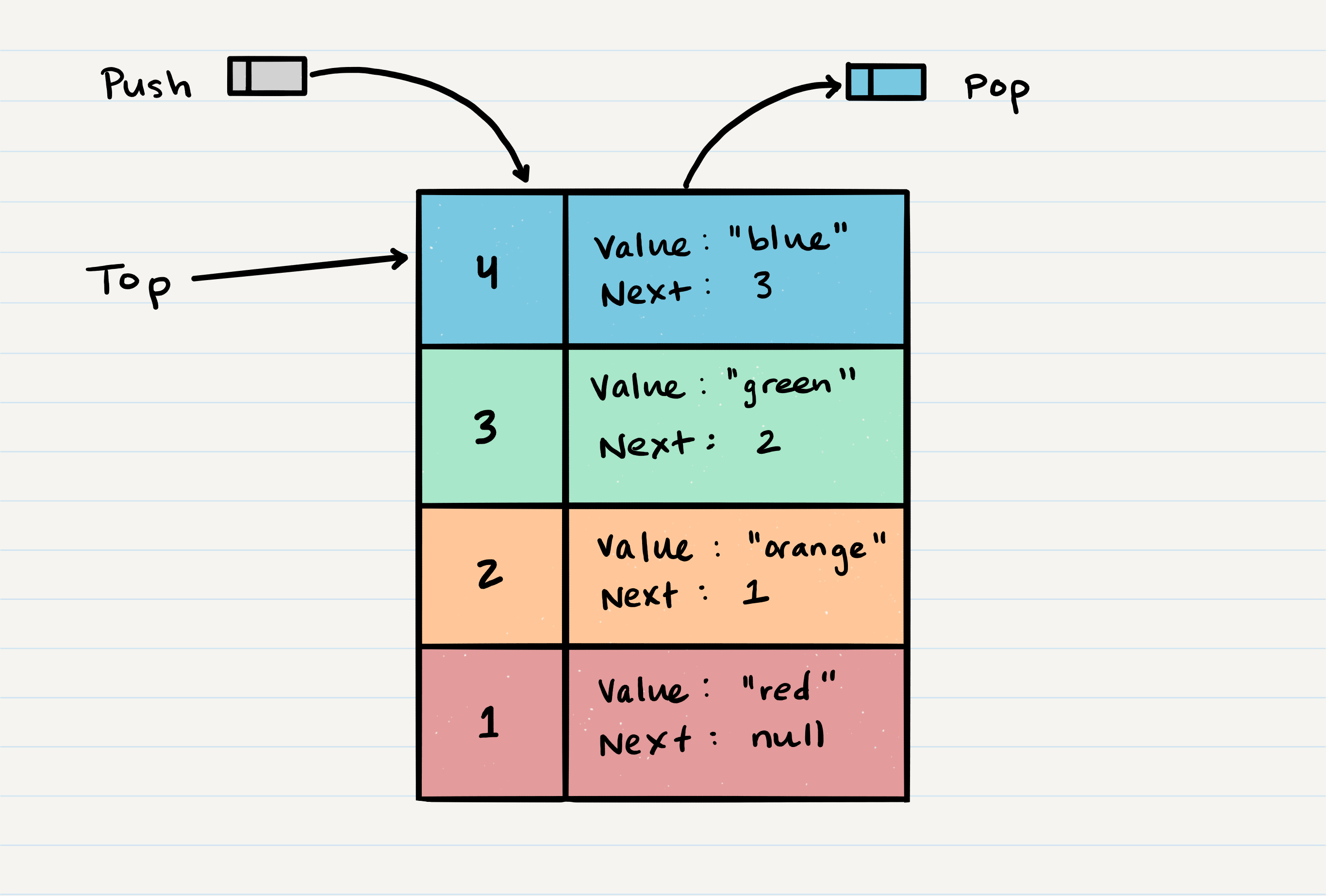
Push
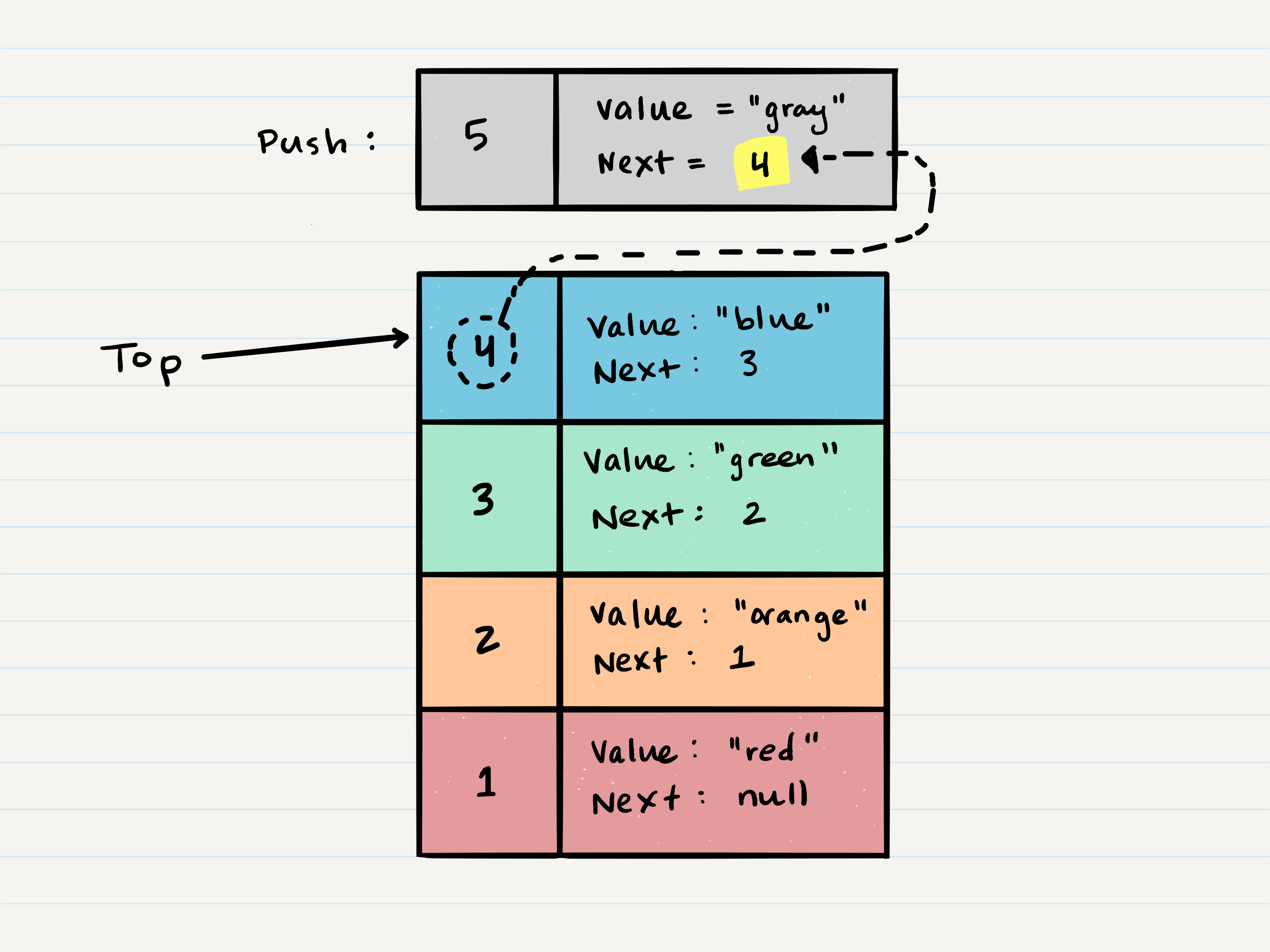
- Pushing a Node onto a stack will always be an O(1) operation
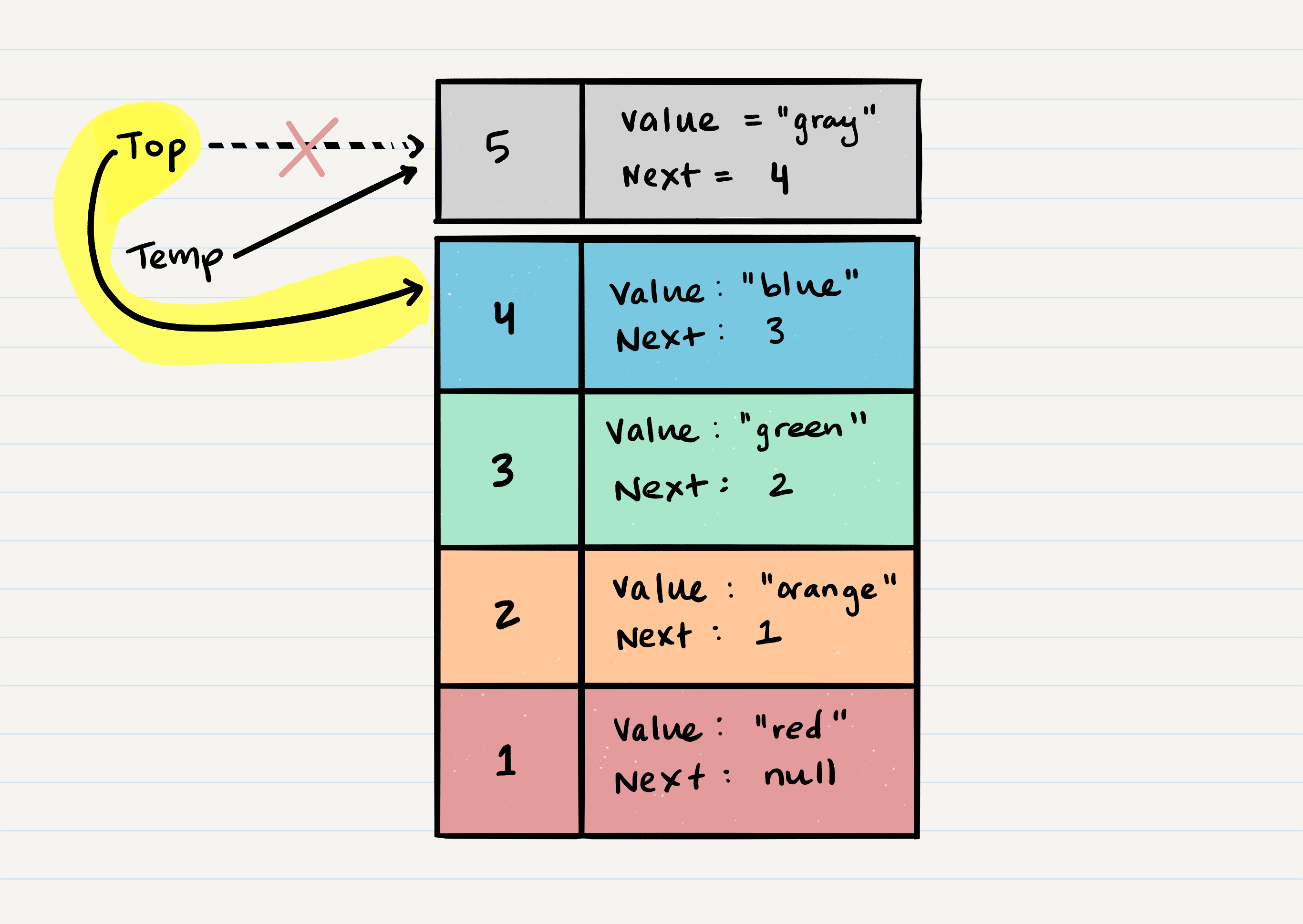
Pop
- check
isEmptybefore conducting a pop When conducting apop, the top Node will be re-assigned to the Node that lives below and the top Node is returned to the user. - pop a Node onto a stack will always be an O(1) operation
Peek
- you will only be inspecting the top Node of the stack.
- O(n)
IsEmpty
- O(1)
Queues
Common terminology for a queue is
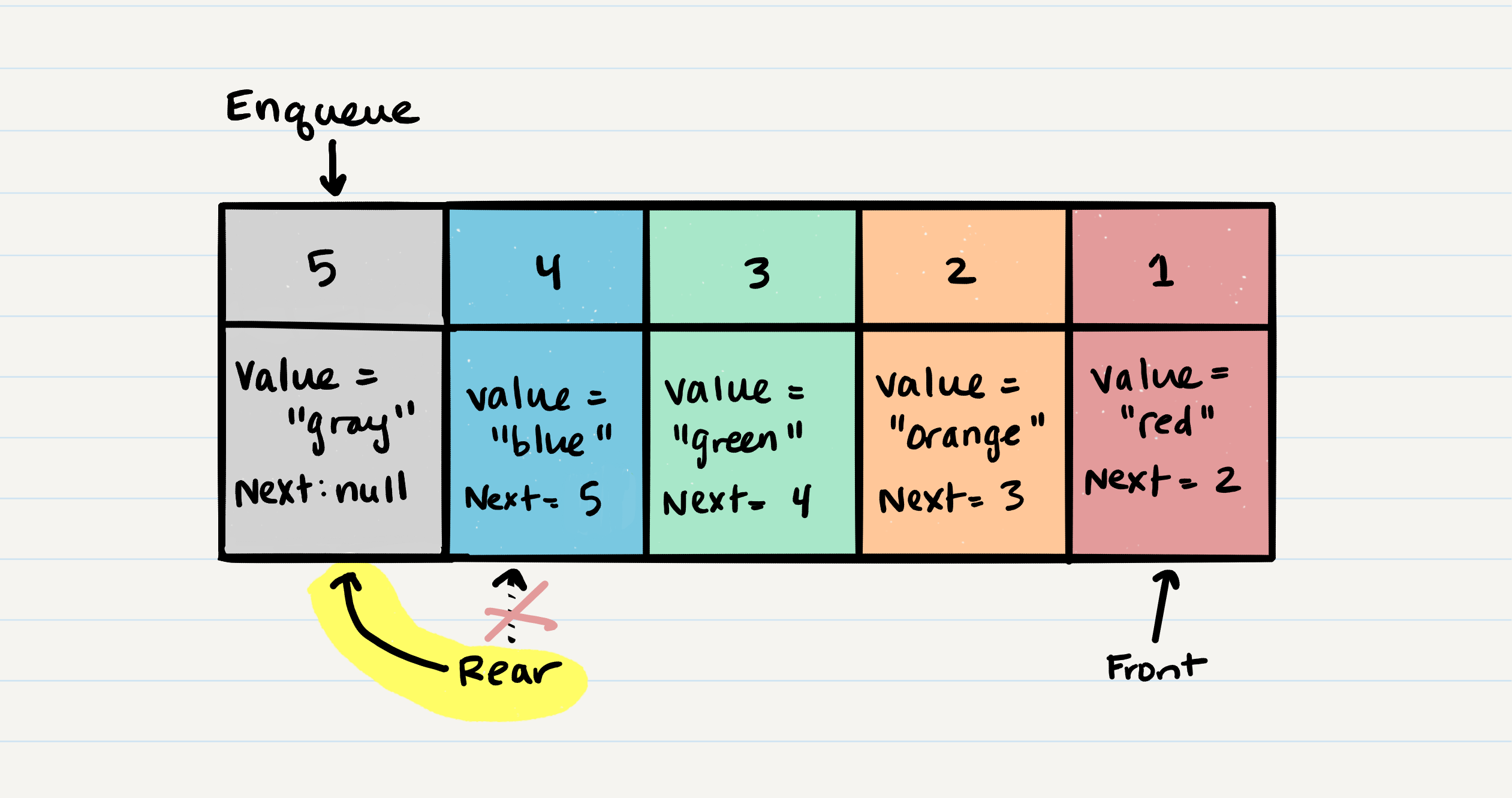
Enqueue - Nodes or items that are added to the queue.
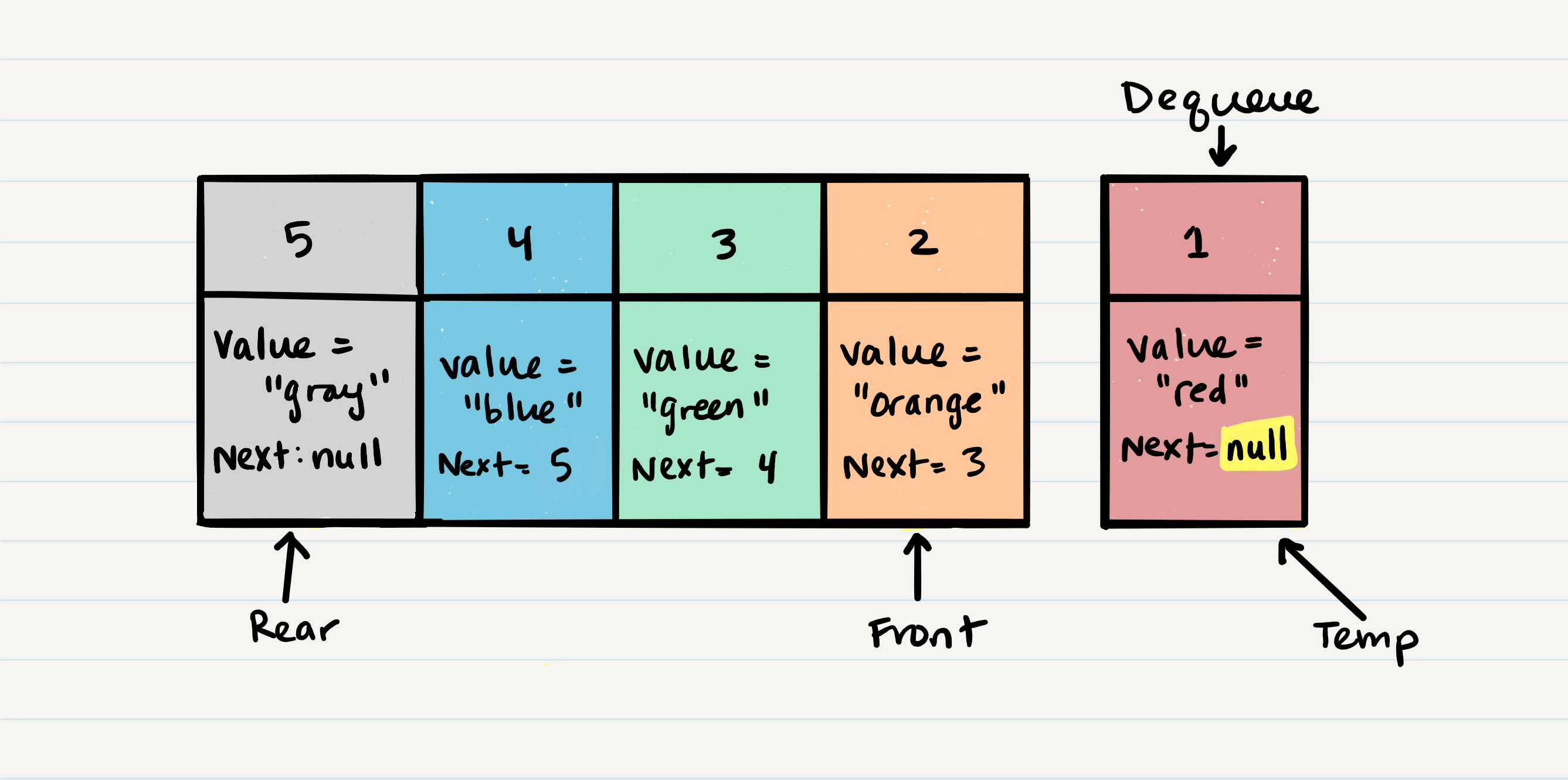
Dequeue - Nodes or items that are removed from the queue. If called when the queue is empty an exception will be raised.
Front - This is the front/first Node of the queue.
Rear - This is the rear/last Node of the queue.
Peek - When you peek you will view the value of the front Node in the queue. If called when the queue is empty an exception will be raised.
IsEmpty - returns true when queue is empty otherwise returns false.
- FIFO : First In First Out
- LILO :Last In Last Out
Queue Visualization
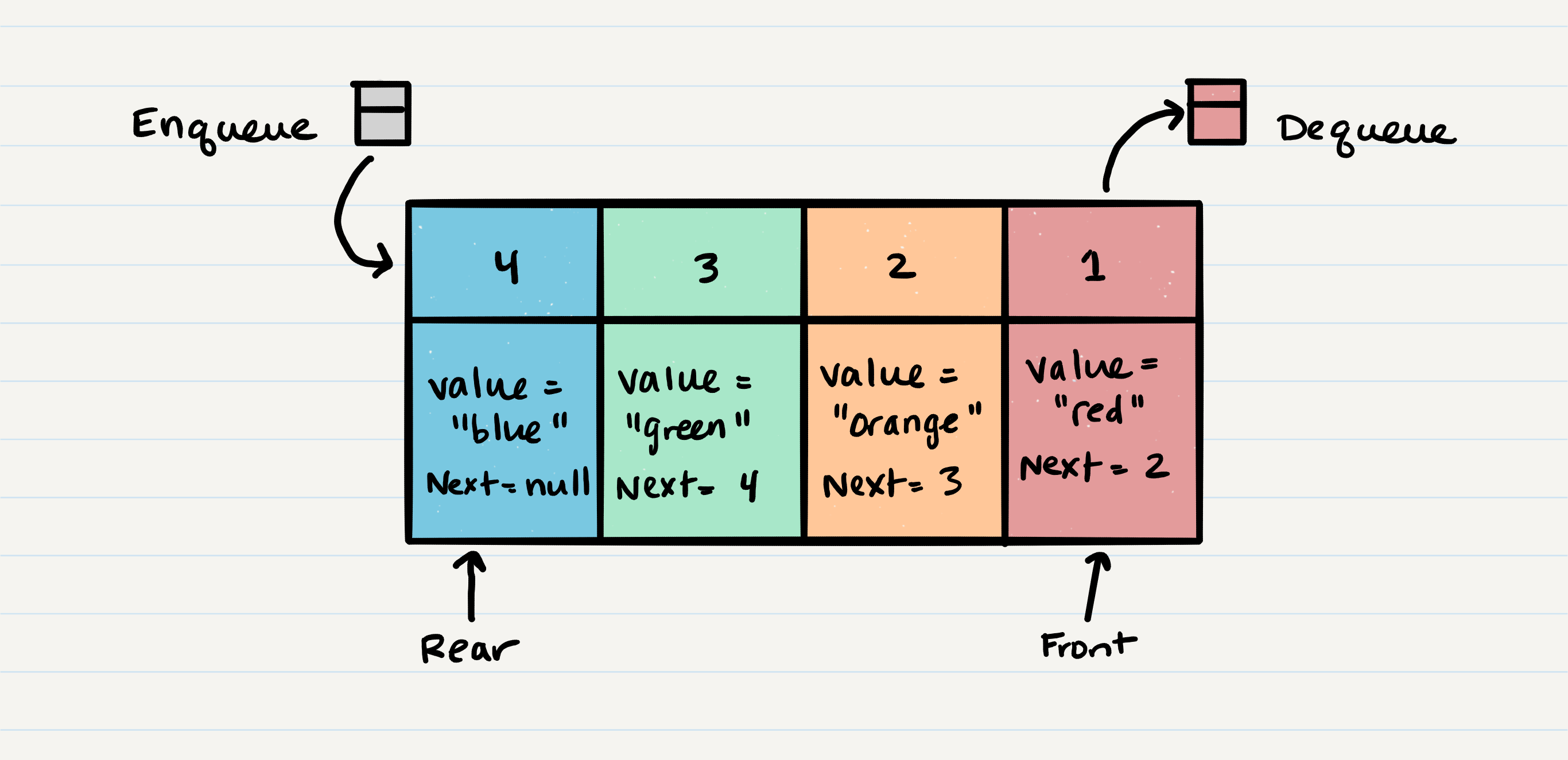
Enqueue
- O(1)
Dequeue
- O(1)
- you would check isEmpty before conducting a dequeue
Peek
- you want to check isEmpty before conducting a peek
- you will only be inspecting the front Node of the queue.
- O(1)
IsEmpty
- to check if the queue is empty
- O(1)