Big O: Analysis of Algorithm Efficiency
Big O(oh) notation is used to describe the efficiency of an algorithm or function. efficiency is evaluated based on 2 factors:
- Running Time
- Memory Space
-
Big O’s role in algorithm efficiency is to describe the Worst Case of efficiency an algorithm can have in performing it’s job
- Input Size Input Size refers to the size of the parameter values that are read by the algorithm. higher input size will increase to Running Time and Memory Space.
Units of Measurement
1- in order to quantify the Running Time in our analysis, we will consider Three Measurements of time:
- The time in milliseconds from the start of a function execution until it ends
- The number of operations that are executed
- The number of “Basic Operations” that are executed 2- In order to quantify Memory Space, we can consider Four Sources of Memory Usage during function run-time:
- The amount of space needed to hold the code for the algorithm
- The amount of space needed to hold the input data.
- The amount of space needed for the output data.
- The amount of space needed to hold working space during the calculation
Orders of Growth
We can describe overall efficiency by using the input size n and measuring the overall Units of Space the Order of Growth represents the increase in Running Time or Memory Space. Constant Complexity means that no matter what inputs are thrown at our algorithm, it always uses the same amount of time or space Logarithmic Complexity represents a function that sees a decrease in the rate of complexity growth, the greater our value of n.
-
If an algorithm has Linear Complexity, the size of our inputs ‘n’ will directly determine the amount of Memory Space used and Running Time length. Linearithmic Complexity is used to describe a growth rate of n by lgn Quadratic Complexity describes an algorithm with complexity growing at a rate of input size n multiplied by n Cubic Complexity is typically just a higher degree of what makes the quadratic complexity grow at such a high rate. Exponential Complexity represents very rapidly growing complexity, such that whatever our input size n
- Worst Case: The efficiency for the worst possible input of size n .
- Best Case: The efficiency for the best possible input of size n .
- Average Case: The efficiency for a “typical” or “random” input of size n.
Asymptotic Notations
- Big O(oh): This notation describes the Worst Case for an algorithm. The Order of Growth used represents the upper bounds of Time and Space.
- Big Omega: This notation describes the Best Case for a given algorithm. The Order of Growth used represents the lower bounds of Time and Space.
- Big Theta: This notation describes the Average Case. The Order of Growth used represents the tight bound of Time and Space.
Linked List
is a sequence of Nodes that are connected/linked to each other. The most defining feature of a Linked List is that each Node references the next Node in the link.
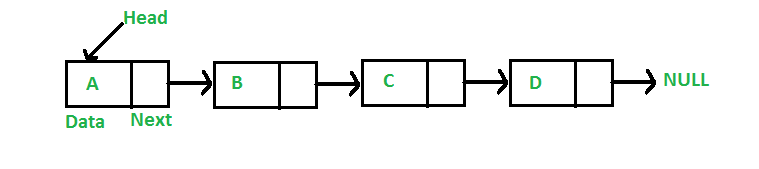
- here are two types of Linked List :
- Singly :Singly refers to the number of references the node has. A Singly linked list means that there is only one reference, and the reference points to the Next node in a linked list.
- Doubly :Doubly refers to there being two (double) references within the node. A Doubly linked list means that there is a reference to both the Next and Previous node.
- there are two references contained within each node: a reference to the next node, as well as the previous node
- Node are the individual items/links that live in a linked list. Each node contains the data for each link.
- Head is a reference of type Node to the first node in a linked list.
- The starting point of the list is a reference to the first node, which is referred to as the head
- Current is a reference of type Node to the node that is currently being looked a
- you are not able to use a foreach or for loop. We depend on the Next value in each node to guide us where the next reference is pointing.
- The end of the list isn’t a node, but rather a node that points to null, or an empty value.
linear data structures
there is a sequence and an order to how they are constructed and traversed. we have to go through all of the items in the list in order, or sequentially.
non-linear data structures
items don’t have to be arranged in order, which means that we could traverse the data structure non-sequentially.
Memory management
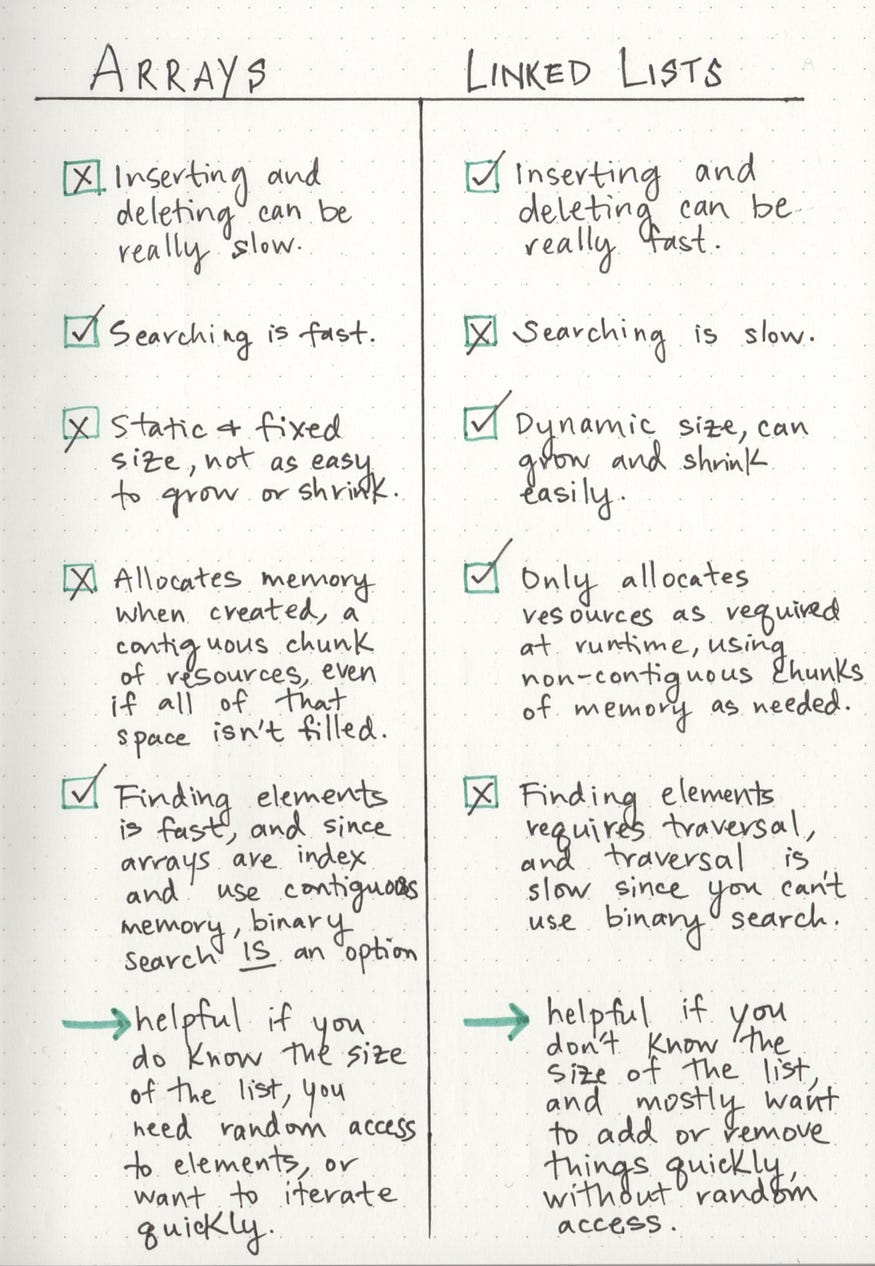
The biggest differentiator between arrays and linked lists is the way that they use memory in our machines.
- When an array is created, it needs a certain amount of memory we’d need all of that memory in one contiguous block.
- array is static data structures
- when a linked list is born, it doesn’t need all bytes of memory all in one place.
- linked list is dynamic data structures
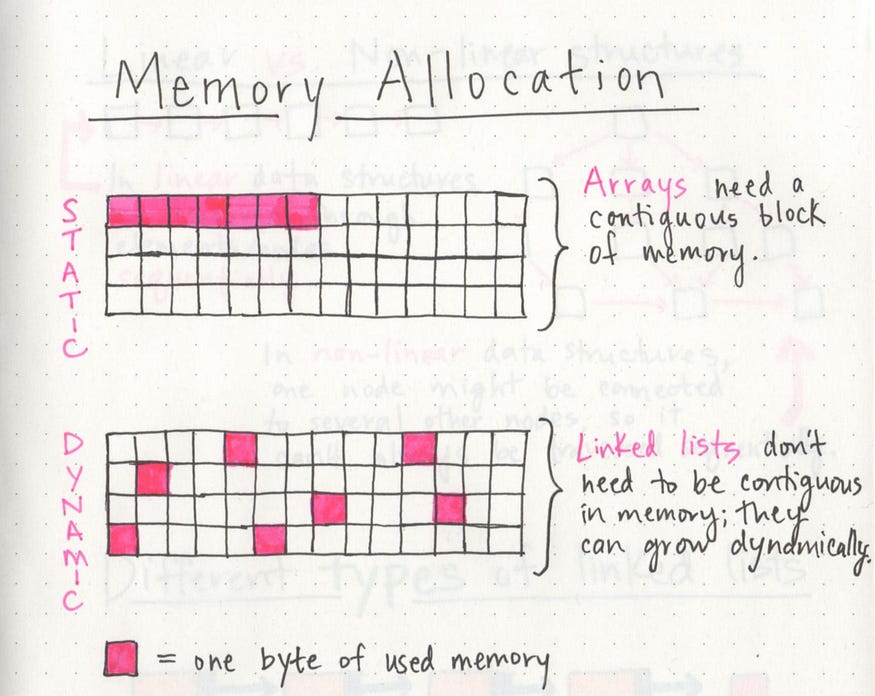
- linked list is dynamic data structures
**A circular linked list **
is a little odd in that it doesn’t end with a node pointing to a null value. Instead, it has a node that acts as the tail of the list (rather than the conventional head node), and the node after the tail node is the beginning of the list.
when the linkedList is the best choice and when it the worst choice